제목 : 예수 첫 글 Q의 문학양식사용에 대한 연구(A Study on the Literary Devices of Q)
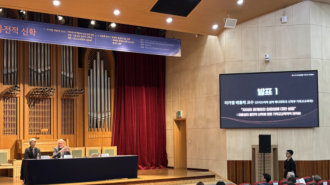
발표 : 나요섭 목사(Rev. Yoseop Ra PH.D)(2009년 12월 11일한국신약학회 제 4회 콜로키움에서 발표)
출처 : 예수말씀연구소
논문초록(국문)
Q가 기원후 40년대 초반 네 번에 걸쳐 편집이 되었다는 나의 이론을 바탕으로 해서 나는 첫 두 편집단계는 예수와 세례 요한이 가르치고 행한 바를 기록하였고 나중의 두 편집단계는 예수에 대한 Q, 공동체의 신학적 해석을 적고 있다고 주장하였다. 나는 각 단계의 편집자가 자기 나름대로의 목적을 가지고 기록했다고 생각한다. 나는 이 논문을 통해 문학적 양식 예를 들면 축복문, 선언문, 비유, 기적이야기, 단화 등이 각 단계에서 어떻게 쓰여졌는지를 연구한다.
먼저 축복문을 보면, 각 편집단계마다 독특한 양식을 사용한다. 첫 두 편집단계에서는 복을 받는 사람들에 대한 일반적인 원칙을 서술하고 있다. 하지만 세 번째 편집단계부터는 복을 받을 사람들에 대한 조건이 붙었다. 이는 예수에 대해 어떻게 대하느냐에 따라 결정이 되는 것이다.
선언문의 경우 양식에 있어 변화가 있는 것은 아니다. 첫 두 편집단계는 예수와 세례 요한과 연관해 있을 수 있는 일반적인 일들에 대해 서술한다. 하지만 세 번째 편집단계에 있어서 선언문은 예수에 대한 유대인들의 적대감이 더 드러내는 데 사용된다. 이로써 예수가 점점 더 조명을 받는다.
비유의 경우도 같은 길을 걷는다. 첫 두 편집단계는 하나님이나 예수의 일반적인 가르침을 전하는데 사용된다. 하지만 세 번째 편집단계부터는 ‘…와 같다’는 직유양식이 사용되면서 하나님의 나라를 서술하고 특히 예수의 역할과 연관해 사용되는 회수가 점점 많아진다. 네 번째 편집단계에서는 예수가 하는 일을 서술하는 이야기 양식으로 발전되었다.
기적이야기의 경우도 세 번째 편집단계에서 예수가 기적을 베푸는 것에 대해 집중한다. 마지막으로 단화의 경우 세 번째 편집단계에서 발전이 되면서 예수의 신분과 역할에 점점 더 초점을 맞춘다. 특별히 대화의 횟수가 점점 더 많아지는 모습을 보여준다. 더욱이 네 번째 편집단계에 이르러서는 세 쌍의 대화가 주로 기록이 되면서 숫자 삼을 사용한다. 이는 나름대로 신학적 목적을 가지고 사용하는 것을 알 수 있는데, 점점 완전성을 드러내면서 신적인 면을 예수에게 부여하는 것으로 여겨진다.
결론적으로 이러한 문학양식의 사용예들을 볼 때 첫 두 편집단계는 역사적 예수의 사건과 말씀을 주로 보도하는 반면, 나중 두 편집단계는 예수에 대한 신학적 작업을 하는 것으로 여겨진다. 이러한 점에서 역사적 예수를 찾아가는 작업에 있어서도 실마리를 제공할 수 있다.
Abstract
Based upon my hypothesis that Q had been redacted four times in the early 40s C.E., I argued that, while the first two redactional layers show what Jesus and John the Baptist taught and did for the people, the last two redactional layers describe how Jesus was confessed by the members of the Q community to defend their faith in God. I suggest that each redactor of the four redactional layers used the literary devices for his/her own purpose. I have analysed how literary devices, such as beatitude, pronouncement story, parable, miracle story, and short pericope, were developed by each redactor. A dramatical change is found in the third redation of Q.
Fist of all, if you take a look at the beatitude, each redactional layer has its own style. The beatitude used in the first two layers sentences the general law of the people who are blessed. But the third redactional layer provides us with the condition, so that the disciple of Jesus might be blessed. The attitude toward Jesus becomes the criterion between the blessed and the cursed.
Secondly, there is no actual change in the form of the pronouncement story. Like the beatitude, however, in the first two layers of Q, the pronouncement story focus on what Jesus and John the Baptist taught and did for the people. But if you come to the third layer you can see that there is more aggressiveness toward Jesus. because of this, Jesus gets more attention.
Parable walks the same road. The first two layers just explain about Jesus' sermon. But from the third layer, it starts to use words such as '… is like …' and after that it describes more about the kingdom of God and especially more about the great works of Jesus. In the fourth layer, the form changed into a story about Jesus' work.
In case of the miracle story, the third redactional layer of Q also concentrates on who Jesus was. Finally, we deal with short pericope found in each redactional layer. Especially, the third redactional layer of Q begins to develop and tells about Jesus' status and his works. And also there are much more dialogues than before. When you come to the fourth layer you can see that the redactor uses three sets of conversations in each short pericope. This shows that he/she had a great purpose in a theological point of view on Jesus. It seems to give more attention to Jesus in a Godly way.
In conclusion, the way the story flows differs from the way the redactor writes. For example, the first two layers mostly show the historical Jesus and his works but the last two layers describe Jesus in a theological way. This provides a clue in finding the historical Jesus.
도서목록
나요섭, 『예수에 관한 첫 글 Q』. 대구: 나의주, 2002
나요섭, “변화하는 사회 속에서 Q 공동체의 자리 찾기.” 『신약성서의 교회론』, 신약논단, 7 (2000) 85-103.
나요섭, “Q의 신학 발전에 대한 연구.” 『신학과 목회』14 (2000) 89-114..
최갑종, 『예수님의 비유연구』. 서울: 기독교문서선교회, 1993.
Rudolf Bultmann, 『공관복음 전승사』. 허혁 역. 서울: 대한기독교서회, 1970.
Crossan, John Dominic. In Parables: The Challenge of the Historical Jesus. San Francisco: Harper & Row, 1973.
Jacobson, Arland D. The First Gospel. Sonoma: Polegridge, 1992.
Kirk, Alan. The Composition of the Sayings Source: Genre, Synchrony and Wisdom Redaction in Q. Leiden: Brill, 1998.
Kloppenborg, John S. The Formation of Q: Trajectories in Ancient Wisdom Collections. Philadelphia: Fortress, 1987.,
Shireck, Robert "Whoes Exorcists Are They?: The Referents of 'Your Sons' at Matthew 12.27/Luke 11.19," JSNT n.s. 46 (1992): 41-51.
Tuckett, Christopher M. Q and the History of Early Christianity: Studies on Q. Edinburgh: T & T Clark, 1996.
Valantasis, Richard. The New Q: A Fresh Translation with Commentary. T & T Clark, 2005.,
Williams, James. "Parable and Chreia: From Q to Narrative Gospel," Semeia n.s. 43 (1988): 94.