God will speak peace to his people
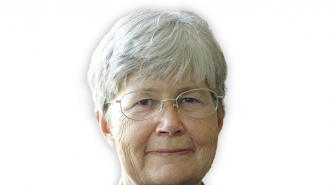
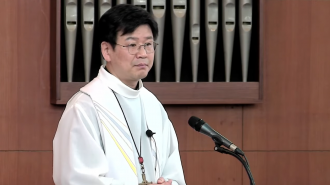
Rev. Dr Olav Fykse Tveit, WCC General Secretary
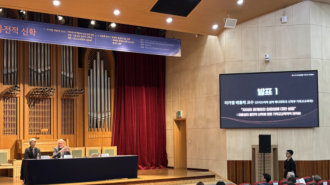
Sermon Seoul, Republic of Korea 27.01.13
Text: Psalm 85: 8-13
Dear sisters and brothers in Christ:
God will speak peace to his people.
Sometimes at the beginning of a new year, some people are asked: What do you want more than anything to hear as a headline in the media in the coming year?
The word to us this day is what the psalmist was longing to hear: "Let me hear what God the Lord will speak, for he will speak peace to his people." (v. 8)
God will speak peace to his people.
That is why we are here. That is why we are going to come together in the 10th Assembly of the World Council of Churches. Our theme for the 10th Assembly is this: “God of life, lead us to justice and peace.”
God will speak peace to his people.
I know and you know that there are many who would like to hear someone telling them that the struggle is over, to hear at last that somebody can speak peace to them. Peace in its fullness. Peace with freedom. Peace without fear. Peace without hunger. Peace without violence. Peace with friendship. Peace with justice. Peace with faithfulness. Peace in our family. Peace in the city. Peace in the church and among the churches. Peace in your land. Peace in our world. Peace among the religions.
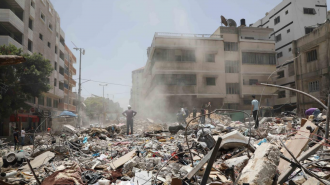
Many cannot wait for the moment when somebody really does speak peace to us. Still they have to wait. You are among them. The Korean people have been longing for a final peace to be settled, a peace that can bring life together, make life together in peace on this peninsula possible again. So have the peoples in Palestine, and Israel. So have the people in Syria.
Peace is something radical, something that has to be told – and has to be believed so that it may become possible. A story my mother told me reminds on these words of Psalm 85. As a young woman she experienced the end of the occupation of Norway and that World War II was over – “that peace came”, as she said. The rumours had been going around for some hours, but people did not dare to believe it. There was nobody to speak peace to them with authority, to tell the truth. What finally made her believe was what she could see: She saw fires, in the streets of Oslo, not bombs, but people were burning the blinds, the curtains they were obliged to use during the evenings to be isolated from one another, to avoid light in the streets, to avoid bombers’ identifying the streets in the city.
What made her hear and feel the peace she was longing for was that people dared to believe in it and they, themselves, took action accordingly.
There is a deep connection between the promise that God will speak peace to his people and that the people dare to act accordingly, to live in steadfast love, in faithfulness, in righteousness, in justice.
The beginning of Psalm 85 is a restless, honest reflection about iniquity, about shortcomings, about sin. It is blended with the hope that God is forgiving, restoring and reviving again – even though this forgiveness is undeserved.
This is the mystery of life, the mystery of good, and the mystery of God’s act in creating through the Word.
This is often experienced through acts of undeserved love from others; signs that help us to believe that God is forgiving us, creating new opportunities through a real embrace.
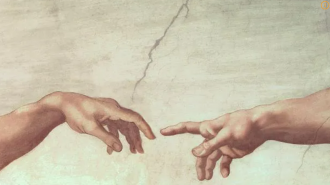
This is also the image of God's love in the psalm: Righteousness and peace shall kiss each other.
Prior to that, we experience the gift of life being renewed, restored – even though this outcome is undeserved. The God of life, the triune God of life, is tangible in our experiences. The Spirit is working in us and among us, the Spirit of God, who makes alive, and is Lord, as we say in the Nicene-Constantinopolitan Creed.
We need the word: to believe, to grasp it, to take it to our hearts – sometimes despite what we experience. We need the Word of God. God will speak peace to his people.
This experience and the word of peace from our God of life to those who are called "God’s people" cannot be seen as something exclusively for some but for the others. How could it be only for us, if it is undeserved? How could it be only for us if it is about peace that brings life in its fullness, in righteousness and love? How could it be only for those who think or act or believe like us, if it is the word of peace from the God of all life?
Still, we live in a time when life is threatened, when injustices in the world are a reality, even a threatening reality. The difference between rich and poor is growing. The unemployment of young people is growing. The consequences of climate changes are disturbing, sometimes dangerous.
God will speak peace to his people – to give us peace, to give us rest in our restlessness with our own shortcomings and sins. God speaks peace to his people so that we can become peacemakers. So that we can bring the word of peace, even to make the peace others are longing for.
The images of peace in Psalm 85 are so rich, so moving, so human, so creative, and so intimate.
The words we hear today in this place are the words of God the Lord. The words we will be hearing in the Assembly of the World Council of Churches in Busan, in some months, are the words of God the Lord, speaking peace to his people. Sometimes we need to hear the words of peace in the words of others who are different from us. Therefore we need the fellowship of the ecumenical movement; to learn about our own shortcomings and the gifts we receive in order to become peacemakers.
The life of God is the life of colours, many colours. It is found not only black or white, or red and blue. Look around you, within the natural world created by God! So it is also in the human family …and in the families of churches …and in the logo of our assembly.
This diversity and colour of life is the peace we receive from the God of life. The peace of God is found in the vulnerability of life, and in strong expressions of life, both in the quiet and in the flourishing of life, in life as it is. This is the peace that transcends all understanding. This is the peace that shall transcend and remove all borders once drawn by hatred and war and violence.
God will speak peace to his people. Do we listen?
God will speak peace to his people. Do we make peace?
God will speak peace to his people.
Amen
자료출처 : World Council of Churches (http://www.oikoumene.org)